
Special education, drug use by kids discussed at school board meeting
Hiatt hired for additional year
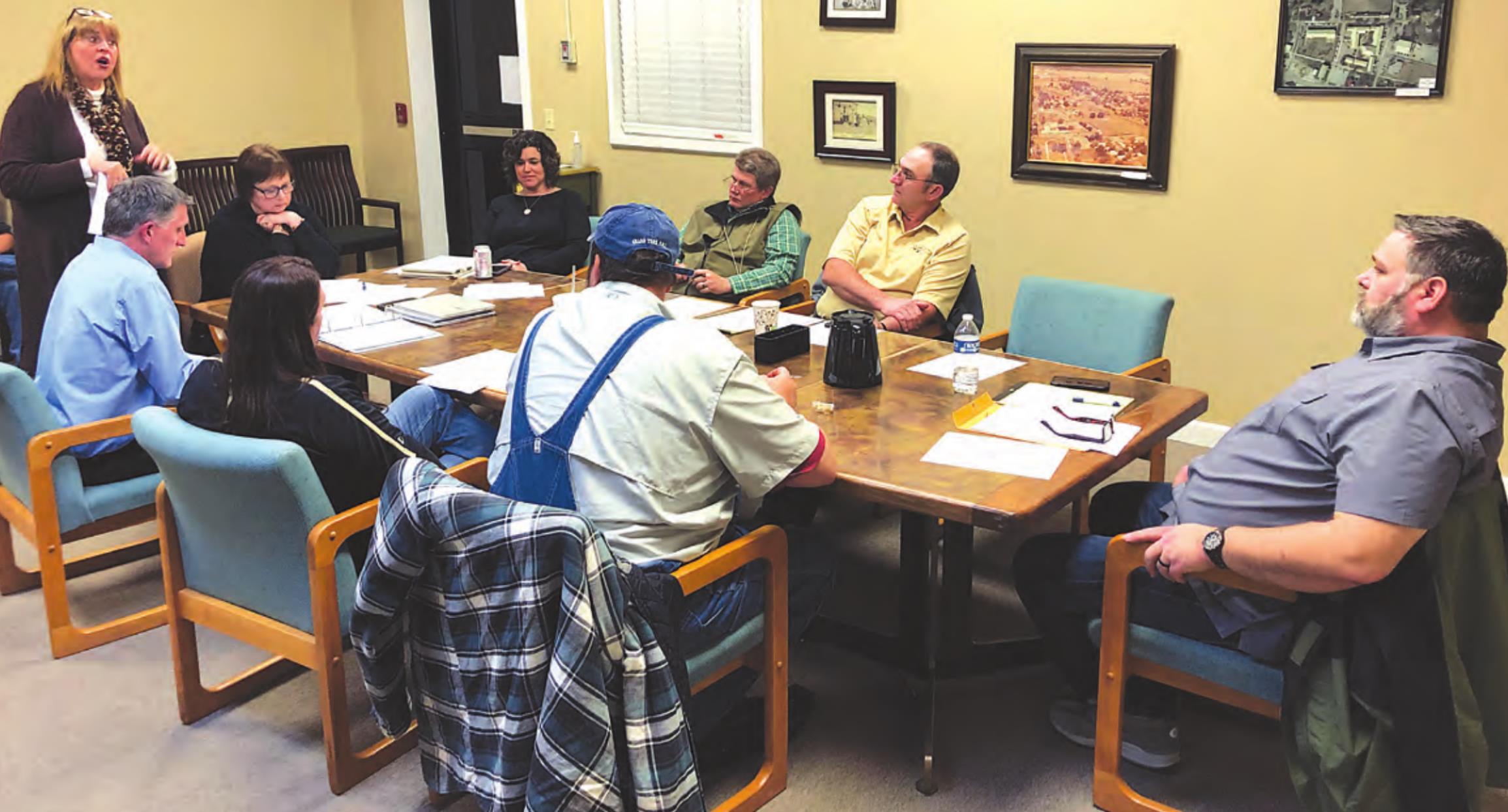


Special education, along with possible drug use by kids, was discussed Monday during the regular meeting of the Allen School Board.
In the meeting, it was mentioned that about 20% of Allen students receive special education services. During administrative
During administrative reports, Sheila Glover, special education director, said there are less children this year at Allen who require special education than the previous year. However, there will be more special education students next year than there were this year.
“There are so many components to it,” Glover said. “It involves boys, girls, 3-year old’s to 21 year old’s. So, wide spectrum, it involves the kids that are here on campus, it involves kids that are at home. No matter what, if they are in our district, or if we accept a transfer, we have to educate them. Whether it’s significant behavioral issues, whether it’s significant cognitive issues, communication, medical, we are required by law to educate kids and address their needs. So, that can cover a lot of things and cause a lot of issues at times.”
Glover said that this year, one of the main things has been to focus on getting scores up within the school setting, and that is something they’ve been working on all year.
Glover presented the board with information that showed strategies that have already been put in place, and ones which are planned.
Identifying kids at a younger age
“The earlier you identify students that have issues and you start addressing it, that’s even those 3 year old’s, then you’re going to have more progress,” Glover said.
Glover said this summer, when enrollment will be conducted for 3 and 4 year old’s, there will be a screening instrument for the parents to fill out.
“And we take that screening instrument, we look at it, and we see if we have low areas,” she said. “And if we do, then we know we need to get consent, and we need to look at those specific areas. We have five areas, and we look at that, and then test in those areas.
“And our goal is to make sure all those little bitty kids are tested during the summer and when school starts in the fall, we’ll have those identified,” Glover said. “So, I expect our levels to come up. There have been kids that have been missed in the past. And there are kids that were not categorized correctly, and so we have spent some money this year on the school psychologist actually doing some evaluations on them because we needed to change some disability categories. And every one of those categories has a weight attached to it, and some of them are much, much higher than the others.”
Board Member Kelly Hurt asked if 20% was commonly seen in schools.
“In rural Oklahoma, yeah,” Superintendent Jeff Hiatt responded.
“It is,” Glover confirmed. “Urban areas, they don’t test kids like we do in rural areas. Maybe it’s because the teachers don’t know the students as well as we do, I don’t know why. But most rural schools will have a higher population (of students in special education).”
Hiatt cautioned, and Glover agreed, that there are some students in special education who are high-functioning, but may only need special education services for speech issues, etc.
National statistics
According to the National Center for Education Statistics (NCES), in 2017–18, the number of students ages 3 to 21 who received special education services under the Individuals with Disabilities Education Act (IDEA) was 7 million, or 14% of all public school students.
Among the students who received special education services, 34% had specific learning disabilities, while 19% were in special education for speech or language impairments.
The rest of those receiving special education were: Other health impairment, 14%; Autism, 10%; developmental delay, 7%; intellectual disability, 6%; emotional disturbance, 5%; multiple disabilities, 2%; hearing impairment, 1%; and orthopedic impairment, 1%.
The category of “other health impairment” includes having limited strength, vitality, or alertness due to chronic or acute health problems such as a heart condition, tuberculosis, rheumatic fever, nephritis, asthma, sickle cell anemia, hemophilia, epilepsy, lead poisoning, leukemia, or diabetes.
A “specific learning disability” is a disorder in one or more of the basic psychological processes involved in understanding or using language, spoken or written, that may manifest itself in an imperfect ability to listen, think, speak, read, write, spell, or do mathematical calculations, according to the (NCES).
Disturbing trend
Glover mentioned Positive Behavioral Interventions and Support (PBIS). According to its website, (PBIS) is an evidence-based threetiered framework to improve and integrate all of the data, systems, and practices affecting student outcomes every day.
“The tier 1 are the kids that maybe just are slightly distracted,” Glover said. “Maybe once in a while you have an issue with them, but they’re not aggressive to self or others, it’s just a slight distraction in the classroom.”
Glover said tier 2 includes students who sometimes have a meltdown or an issue where they hit another student once in a while but aren’t considered violent students.
“And your tier 3 are your violent students,” Glover said. “So, I work in 12 different school districts in Southeastern Oklahoma and I can tell you that this year, there has been such an increase in the number of students ... that are completely disrupting the learning environment because they’re just out of control in the classroom.”
Glover emphasized that the increase in out-of-control students isn’t just in the 12 districts that she works in. “When I go to the conferences, that’s one of the things that has been the biggest issue this year,” she said.
Glover also said it’s occurring in young students as well, such as 3, 4, and 5 year old’s, and students in kindergarten and first grade.
She said what’s happening today is sad and scary.
“This is the first time in my life that I have ever really thought about my grandchildren and my great-grandchildren’s future and what it’s going to be like, because I have seen so much stuff going on in schools this year,” Glover said. “I can’t even explain all the stuff, it’s just unbelievable. So, one of the things that we are doing on the 25 th of this month, we have Dr. Laura Riffel coming in. And she is going to do training for us on tier 3 kids. Those kids that go from 0 to 100 just like that without any warning. They’re the ones throwing desks, kicking teachers, throwing rocks, doing all of those kinds of things.”
Dr. Riffel holds multiple degrees, including a Ph.D. from the University of Kansas, and has been working in the field of education for over 30 years. For more information, visit www. behaviordoctor.org.
For more information on Positive Behavioral Interventions and Support, visit www.pbis.org/.
Possibility of drug issues
Hurt wondered if at least some of the students with behavioral issues might be involved with taking drugs.
“The reason I ask that, is, I’m on an addiction recovery board for a recovery house,” Hurt said, “and we’ll do interviews with those folks that are in our program. And, when we do our survey with them, most of them started doing drugs when they were 7 and 8 years old. And, they’re doing it with their parents or other family member.”
Hurt later spoke with The Advocate reporter. “In my mind, when I hear about these children who are so uncontrollable at school, I have to wonder if some percentage of them are coming out of a drug environment,” he said, “and what we’re seeing is not necessarily a behavioral issue, but actually already a drug issue at such a young age.
Hurt said it is a reality that there are issues with drugs that are filtering through all aspects of society.
“Including our schools as far down as into our elementary classes,” he said. “And I don’t know if that’s something people really think about, or are aware of, but it’s reaching that far down (to kids that age). I’d always thought that drug issues start in the teenage years, but what I’ve come to realize with some folks is, if both of your parents are addicted to drugs or alcohol, you’re born into it. And we have a breeding population of drug addicts, I don’t know any other way to say than that, but they’re their own subset now.”
Hurt said drug rehab is a booming business.
At the meeting, Board member Robert Hammonds said he recently heard of a student asking, that, if his parents smoked medical marijuana around him, would it show up on a drug test because he breathed it in.
“Yep,” Hurt said.
“And he didn’t know, you know, if he played sports would that disqualify him just because his parents do medical marijuana (around him),” Hammonds said.
Hurt said the reason he brought up the subject of drugs, was how shocked he was when he first heard how young the addicts were when they started taking drugs.
“But after being in that group for about two years now, it’s common,” Hurt said. “You just don’t think about them starting that young, but it happens.”
Executive session
In other business, the board entered executive session to discuss school employment issues.
After returning, the board approved the hiring of Jeff Hiatt as superintendent for the 2020-21 school year, and accepted Gerald Beeney’s resignation from the cafeteria.
No action was taken on an issue with school property disposal or demolition.
Consent agenda
The board approved the consent agenda which included the fiscal year 2019-2020 purchase orders and encumbrances: general fund numbers 225 through 239 ($10,587.99); building fund numbers 44 and 45 ($2,632.09); building bond fund numbers 26 and 27 ($3,000). The consent agenda also
The consent agenda also included the treasurer’s report; activity fund report; and travel request – TR-27.