
Country Comments
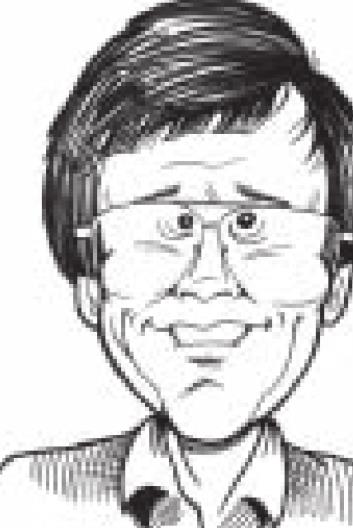
My family believes the only reason a fruitcake should be in our house is if it is on the way to another location. Calvin Trillin has….
A Fruitcake Theory
This was the year I was going to be nice about fruitcake. “Just try to be nice,” my wife said. My younger daughter—the one who is still in high school and talks funny—said the same thing. Actually, what she said was, “Cook it, Pops. Take a chill on the fruitcake issue.” That’s the same thing.
They were right. I knew they were right. It’s not that I hadn’t tried to be nice before. It’s not my fault that some years ago I happened to pass along a theory about fruitcake I had heard from someone in Denver. The theory was that there is only one fruitcake, and that this fruitcake is simply sent on from year to year. It’s just a theory
But every year around this time, someone calls up and says something like, “I’m doing a story on people who make fun of the holiday symbols that so many Americans hold dear—symbols that do so much for warm family life in this great country of ours and remain so very meaningful to all decent people. You’re the one who maligns fruitcake, right?”
“Well, it’s just a theory,” I always mutter. “Something someone in Denver said once.”
Who in Denver? Well, I can’t remember. I’m always hearing theories from people in Denver. People in Denver are stinky with theories. I don’t know why. I may be because of the altitude, although that’s just a theory.
Anyway, I can’t be expected to remember the name of every single person in Denver who ever laid a theory on me. I’ve had people in Denver tell me that if you play a certain Rolling Stones record backward you can get detailed instruction on how to dismantle a 1977 Volkswagen Rabbit. A man I once met in a bar in Denver told me that the gases produced by the drying of all these sun-dried tomatoes were causing the earth to wobble on its axis in a way that will put every pool table in the western hemisphere nearly a bubble off level by the end of this century. Don’t get me started on people in Denver and their theories.
The point is that nobody ever interviews the person who gave me the theory about fruitcake, because nobody wants to start picking through this gaggle of theory-mongers in Denver to find him. So, I was the one called up this year by someone who said he was doing a piece about a number of Scrooge-like creatures who seemed to derive sadistic pleasure out of trashing some of our most treasured American holiday traditions.
“Well, come right over” I said. “It’s always nice to be included.”
He said he’d catch me the next afternoon, just after he finished interviewing a guy who never passes a Salvation Army Santa Claus without saying, “Hiya, lard-gut.”
When he arrived, I remembered that I was going to try to take a chill on the fruitcake issue. I told him that the theory about there being only one fruitcake actually came from somebody in Denver, maybe the same guy who talked to me at length about his theory that dinosaurs became extinct because they couldn’t adapt to the personal income tax.
They, trying for a little historical perspective, I told him about a family in Michigan I once read about that brings out an antique fruitcake every Christmas, a fruitcake that for some reason was not eaten at Christmas dinner in 1895 and has symbolized the holidays ever since. They put it on the table, not as dessert but as something between an icon and a centerpiece. “It’s a very sensible way to use a fruitcake,” I said. I was trying to be nice.
“You mean you think that fruitcake would be dangerous to eat?” he asked.
“Well, you wouldn’t eat an antique,” I said. “My Uncle Ralph used to chew on an old sideboard now and then, but we always considered it odd behavior.” “Would a fruitcake that isn’t an antique be
“Would a fruitcake that isn’t an antique be dangerous?”
“You mean a reproduction?”
“I mean a modern fruitcake.”
“There’s nothing dangerous about fruitcakes as long as people send them along without eating them,” I said, in the nicest sort of way. “If people ever started eating them, I suppose there might be need for federal legislation.
“How about people who buy fruitcakes for themselves?” he asked.
“Well, now that you mention it,” I said, “nobody in the history of the United States has ever bought a fruitcake for himself. People have bought turnips for themselves. People have bought any number of brussels sprouts for themselves. But no one has ever bought a fruitcake for himself. That does tell you a little something about fruitcakes.” “Are you saying that
“Are you saying that everybody secretly hates fruitcake?” he asked.
“Well, it’s just a theory.”
—CC—
CHRISTMAS STORY
During December we wanted to share some of our favorite Christmas stories from past Christmases. Today we hope you enjoy . . .
LEAD, KINDLY LIGHT
Anna Penner, a German Mennonite, grew up in Ukraine, which was occupied by Russians in 1922. Then during World War II, her village was invaded by Germans, then taken back by Russians. To escape the crossfire, Anna, her sister Neta, and other German refugees left Ukraine. That’s where we pick up her story, at age forty, haunted by the fear of war and displacement.
In March 1944, our train rolled into the station in Ratkersburg, a small Alpine town in Germanoccupied Yugoslavia.
To accommodate us, the Germans displaced the local villagers and gave their homes to us refugees. Some friends from my village and I were placed in a house high up in the Alps, about ten kilometers from Ratkersburg. Neta and her daughters lived about five kilometers away.
Naturally, the local people resented, even despised, us. As we’d feared the Soviet communists back home, we now lived in fear of partisan activity against us. Wild stories circulated. Local partisans wearing firemen badges had raped refugee women, plundered their homes, shot at young people. Living in fear, we kept our doors bolted. Women never traveled alone. Our young people kept a strict curfew.
By December 1944, the battlefront was once again too close for comfort. Searchlights fanned the night skies. Explosions rocked the windows as Russian bombs hit or missed their targets. Once more our whole community feared for our lives, and thought about evacuation.
I received a letter from my sister Tina, who had fled to Germany. “Come to Germany,” she wrote. “You’ll be safer here.”
Yes, I’ll go. It’s time to leave. So, three weeks before Christmas, a friend named Anna and I hopped the milk truck down the mountain to town. We took a train to Graz, Austria, to apply for a visa to move to Germany.
It was toward evening before we started home. As the dark settled in, it started to rain. Anna fidgeted in her seat. “Miserable night to be out walking,” she muttered.
I agreed.
She thought for a minute and then announced, “I’m going to get off before Ratkersburg and spend the night at my son’s. You’re welcome to come with me, Anna.”
No. It didn’t feel right. I didn’t want to worry my housemates needlessly by changing my plans and not coming home.
The train slowed and my friend picked up her purse. “Coming?” she asked hopefully.
“Thank you, but I need to go home.”
Once she’s waved good-bye and disappeared into the dusk and descending fog, I sat there alone, suddenly desolate and gripped by fear. As we passed through the next village, I pressed my face to the cold window. I could barely make out the rooftops. The rain turned to sleet, pecking at the windowpane. Anna, I should have gone with you, I thought, as if I were a child separated from my mother and wishing her back to my side. If only I weren’t alone in the dark . . .
About eight o’clock, I stepped off the train in Ratkersburg. Since morning an icy wind had come up and it tore through my threadbare coat. My thin kerchief seemed useless. The sleet stung my face. Seeking out the shelter of the dimly lit train station, I sat on a bench and deliberated about the walk ahead of me: at least an hour uphill, on a black, starless night. The footpath lay between a cemetery and vineyards and dense forest—and I’d have to ford a rushing stream.
As I thought about the dangers, a panic flooded my being. In the last twenty years, I’d braced myself for dangers and journeys. But tonight, my courage failed me. Utterly alone, far from home in a foreign land, the dam broke. No way! I thought. There’s no way I can make that trip tonight. In the pitch dark. In this weather.
The train had pulled out, the last train of the night. I looked around the lonely station and timidly approached the stationmaster. “Sir, could I spend the night here, Please?”
“No, Ma’am,” he said emphatically.
“I have so far to walk . . .”
“Ma’am, I can’t allow it,” he said abruptly. He grabbed his coat and hat and fished for keys in his pocket. Then he headed for the door.
The panic mired my feet. I can’t go up that mountain.
At the door the stationmaster grew downright impatient. “C’mon. I’m locking this place up.” He must have read the alarm in my eyes. More kindly he added, “During an air raid, you’ll be safer up the mountain anyway.”
It seemed a small comfort. I listened to the receding crunch of his boots on gravel; the only man who could have helped me vanished into the icy mist.
For a few moments, I stood under the eaves of the straw roof. Finally, I turned to the heavens, to the One my mother had turned to so often. “Father,” I whispered, continued Page 6 “I’m so scared. Take away this terror. Walk with me.”
Suddenly there came a light, whiter than white and shining. It surrounded me. Oh no, the bombers!
I scanned the sky for the telltale flares that preceded an air raid. I waited for the roar of planes, for the explosion of the hit.
Nothing. The sky was empty. Yet all around me the light shone. I felt as though I were standing in a dome, a huge globe of light about six feet across. Inside, it was bright as day. Outside, the night was black and strangely silent.
An indescribable peace suddenly filled my heart. I knew I could head toward the mountain. I’ll start out walking, I thought with a robust confidence that I didn’t have to force. With each step, the light moved with me, shining the path at my feet.
Instead of panic, joyous hymns welled up. “Oh, take my hand, my Father,” I hummed softly, thinking it wise to stifle my strong urge to belt out the hymn tune with my lusty soprano.
As I started my ascent, the wind stopped, then the sleet. In fact, it grew warm as a summer’s night. I loosed my kerchief. How strange to be so warm in December.
When I reached the dangerous stream, the water glistened like a thousand diamonds. I clearly saw the series of flat rocks scattered across the foaming water. Surefooted, I stepped from one to the next to the next until I reached the far bank.
The light guided and cheered my all the way up the mountain. As I neared the old house, I looked back over the treacherous pass. Like a ribbon of light, it lay behind me. Excitedly I knocked on the door, wanting to show my friends the awesome sight. The door opened. A strong gust of wind grabbed it, almost tearing it off its hinges. “Anna! Come in!” my friend yelled, pulling me inside. My housemates crowded around me. “Such a dreadful storm! Weren’t you afraid?” one asked.
“No,” I shook my head. “The storm died . . .”
But I got no further. I suddenly could hear it too; the howling wind, the sleet pelting the windows, the moaning of the house.
While one friend busied herself with my supper, another took my coat. “It’s dry,” she said. Not quite believing what she was seeing, she repeated, “Anna, your coat’s dry.”
“I know,” I said matterof-factly.
I did my best to explain, but my friends looked at me with that puzzled expression I’ve come to expect. You see, from that night on I haven’t known real fear, even in the succeeding months and years, when the pandemonium of the war—and the Cold War— separated me from my family.
For months I lived in a refugee camp in Munich, Germany. Then I went to Paraguay for nine years before coming to British Columbia in 1955. I was reunited with my three sisters, nieces and grandnieces—all had emigrated to western Canada.
In Paraguay I worked side by side with German Mennonite men, hacking out a place for our people in the dense jungle. Well into middle age, I carried buckets of damp earth away from a well-digging site. I cooked meals over primitive fires, feeding the men who built our houses. Eventually I owned a small hut with a straw roof—a home of my own. I lived alone, and at first, I had no glass or wire netting to cover the windows, no lumber to build a proper door.
At times people warned me of thieves in the night or of poisonous snakes that would slither into open houses. Before December 1944 I would have been terrified. But no more. If fear drew near in the evenings, I’d start to sing, maybe, “Oh, take my hand, my father.” Or I’d recite the poem I’d learned as a child: “Don’t be afraid. God is here.”
Don’t be afraid. For fifty years it has been a theme of my life.
Don’t be afraid. By the illuminating warmth of a kindly angelic light at Christmastime in war-torn Europe, it was God’s word to me, a forty-year-old woman alone, afraid of the night.