
Country Comments
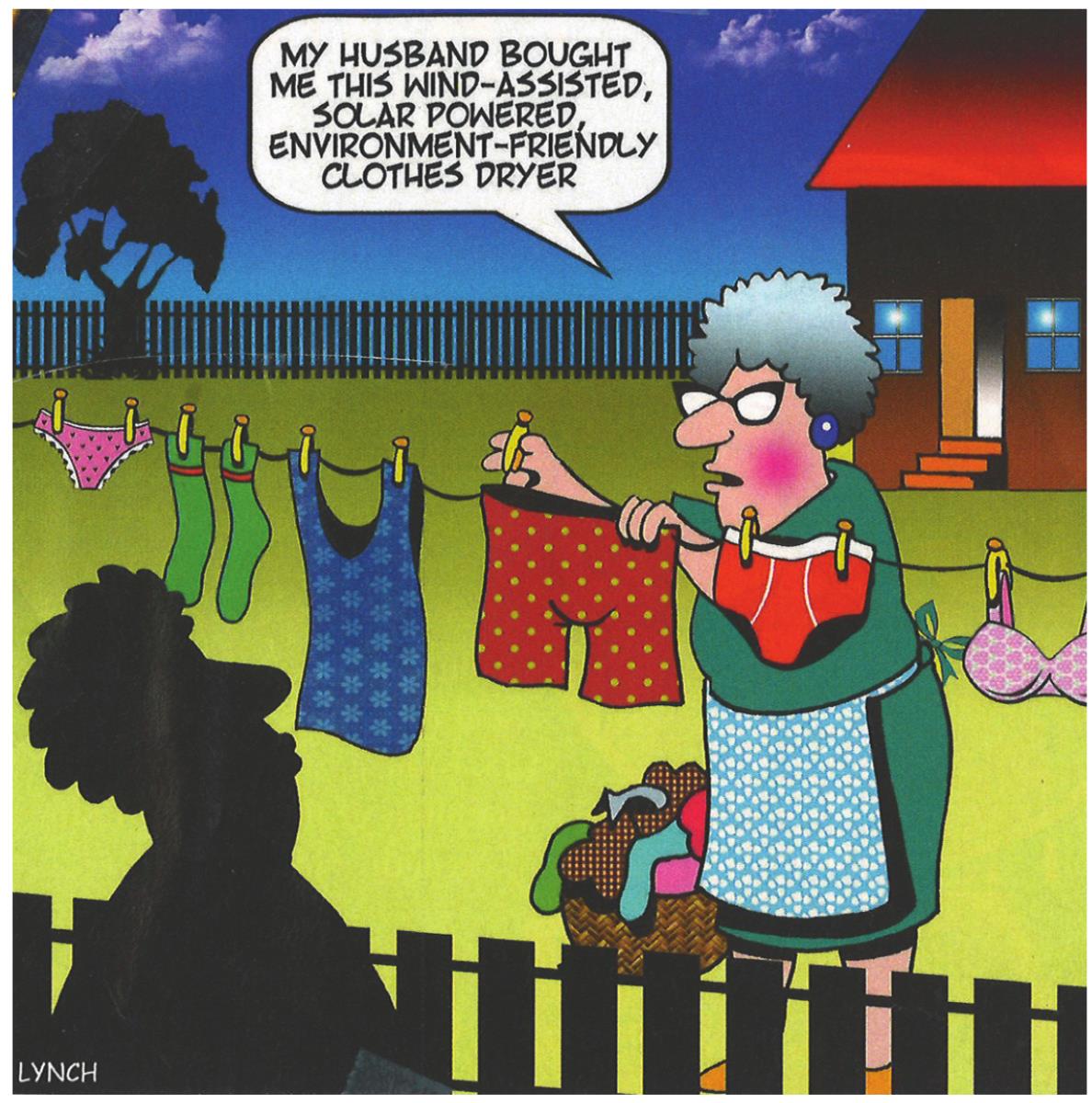
Quote of the Week…“We are told that automation is a process that gets all the work done while you just stand there. When we were younger, this process was called Mother.”
Even before America contracted this pandemic of coronavirus, we were dying from a plague of loneliness.
Economists and politicians worry about the economic costs as everything shuts down. No basketball, no museums, no school, and--Lord have mercy -- no baseball. Hotels and restaurants are taking massive hits.
But the coronavirus shutdown will hurt America on a far deeper level. It will exacerbate our most acute pre-existing condition: the cancer of loneliness and alienation.
We Americans do not belong to as many things as we used to. We go to church less, we join fewer clubs, we volunteer less. We also know our neighbors less, get married less, and have children less.
Nearly one in three Americans lives alone, which is double the rate in 1960. Two decades ago, 70 percent of Americans were members of a church, mosque, or synagogue, and that’s less than 50 percent now.
The Joint Economic Committee found “Between 1974 and 2016, the percent of adults who said they spend a social evening with a neighbor at least several times a week fell from 30 percent to 19 percent.”
Americans, in other words, have been “social distancing” for decades, and the result is an affliction as lethal as coronavirus. Now that social distancing appears necessary in order to slow the spread of coronavirus, it will get worse, right when we need each other the most.
Loneliness, isolation, and alienation are deadly. Sir Angus Deaton and Anne Case, who documented the startling rise in suicides, drug overdoses, and alcohol-related deaths—deaths of despair— found that social isolation was a key factor in this crisis. Loss of connection to family, “spiritual fulfillment,” and “meaning,” are the driving causes of deaths of despair.
“Social relationships, or the relative lack thereof, constitute a major risk factor for health,” researchers at the University of Michigan found in 1988. One recent metastudy found that survival increases by 50% in people with strong social connections. Put the other way, the risk of dying goes up by 33% if you don’t have strong social connections.
Although we’re generally coming apart as a society, tough times usually bring us together. Trial, catastrophe, or tragedy make it most clear that we need others, that we need to belong to little platoons, that we need to reinforce our understanding of ourselves through our relations with others.
That’s what makes coronavirus doubly cruel. While most crises require us to come together, this one seems to require us to go apart. Think about the hubs of infection. In New Rochelle, the literal center of the state’s “containment zone,” is a synagogue. Stories suggest the virus may have been spread at a funeral and was probably spread at a bat mitzvah. It was spread through worship services and through schools that were intertwined with the synagogue through the webs of a community jointly pursuing goods outside of and larger than themselves.
What made the lives of these members of Young Israel so rich was what made them all so vulnerable to the virus. Their mass gathering to celebrate a neighborhood girl and to mourn with a widow is the model of what we need more of in America in general.
But today, it appears, we need less coming together, in order to slow the spread of the virus. In Bergen County, New Jersey, there will be no shul, no shiva, no funerals, no playdates, per the instruction of the rabbinical council.
President Trump gave particularly dispiriting, but needed, guidance Wednesday night: All visits to retirement homes should end unless they are medically necessary. The elderly in America are so neglected and so lonely. Now we need to leave them alone even more.
The novel coronavirus has enflamed a preexisting condition that was killing America: alienation.
Timothy P. Carney Washington Examiner
Having recently celebrated another birthday I appreciated the following column by Martha Bolton…..
Thanks for the Memory . . . Loss
“Memory is another thing that dulls with age. But more importantly, memory is another thing that dulls with age. As you grow older, you’ll find yourself repeating things and forgetting where you put your glasses, your car keys, your checkbook . . . your teeth. I heard of one older gentleman who looked all over the house for his dentures. He finally found them hours later when he sat down on his sofa. Imagine explaining that one to the emergency room team: “I don’t care if it is physically impossible, doctor, I’m telling you the truth. The bite was selfinfl icted.”
We all know the negatives about losing our memory, but believe it or not, there are some positives. For one thing, think of all the new cars you get to drive home.
“Whaddya mean we don’t own a Lexus,” the next night a Suburban, the next night a BMW convertible. For some reason, though, if you find a Yugo parked in your spot, your memory usually comes back to you.
Another plus to memory loss is the fact that there always seems to be more money in your checkbook than there should be. That’s because you don’t remember to record amounts written and to whom. I’m still working off the deposits I made six months ago. I think I’ve spent the same money five or six times. Maybe that’s why my bank keeps sending me all those letters . . . and here all this time I thought they were just being neighborly.
There are other good things about losing your memory. When your memory goes, your Christmas list gets cut in half. “How many kids did you say we had again?”
And without a good memory, you only have to to mail in your taxes every other April 15 th or whenever you happen to remember you’ve got an Uncle Sam. That alone should take some of the sting out of aging.
You even start visiting your neighbors more often. Of course, it’s because you think that’s where you live, but they don’t know that. They might, however, get a little suspicious when an entire season passes before you say you need to go home.
It hasn’t been proven yet, but I’m fairly certain our memory cells die faster with physical exertion. They must. Think about it: How many times have you walked into a room to get something only to stand there looking around wondering what it was you went into the room to get?
I think it’s the walking that does it. If you would have stayed in your chair just thinking about getting up to get whatever it was you needed to get up and get, you would have remembered what it was you were going to get up and get in the first place.
Memory cells die off while using the telephone, too. Has this every happened to you? You dial a number, then completely forget who it is you’re calling? You don’t hang up, of course, because you’re sure you’ll remember who you called the minute you hear the voice on the other end of the line. Unfortunately, though, a six-year-old answers and you’re still clueless. The kid doesn’t help you out either, when you ask him who his parents are because he’s been taught not to talk to strangers. So you simply pretend to have dialed the wrong number, until the six-year-old finally recognizes your voice and says, “Grandpa!”
What I don’t get is why our memory has to go on the blink at a time when we’re given so much to remember. Our doctors tell us to take three of one pill four times a day, four of another pill three times a day, and one of yet another every ten hours for twelve days. How are we supposed to remember all that? Why can’t they just put all our medications into one giant capsule that’s set to release the proper dosage at the proper time? Sure, they make those little containers marked Sunday, Monday, Tuesday . . . but what good are they if you don’t know what day it is?
Then there are all those other numbers we have to memorize nowadays: our bank account number, our driver’s license number, our Social Security number, the PIN numbers for twelve credit cards, our previous three addresses, our age, and our frequentflyer account numbers. I don’t know why we can’t be assigned one number for all of it and stay with that for the rest of our lives. Like twenty-five. I’d be happy to keep the number twenty-five for my PIN, my phone card number, and my permanent age.
Long-term memory doesn’t seem to be as big a problem as short-term memory. While we may not be able to remember what we said to someone five minutes ago, we can clearly recall the hurtful comment our spouse made back in 1984, what he was wearing at the time, and the barometric pressure that day. Some people call that selective memory. Maybe it is. Maybe as we grow older we get better and better at selective memory. We remember in vivid detail those few things that brought us pain, while forgetting the hundreds of blessings that come our way every day.
I think we’ve got it backwards.”